Single- and Multi-Component Molds for Functional Plastic Parts
Single-component molds form the basis of many plastic products. Part geometry, gating concepts, and material selection are engineered to ensure that the component is produced reliably in a single injection molding cycle.
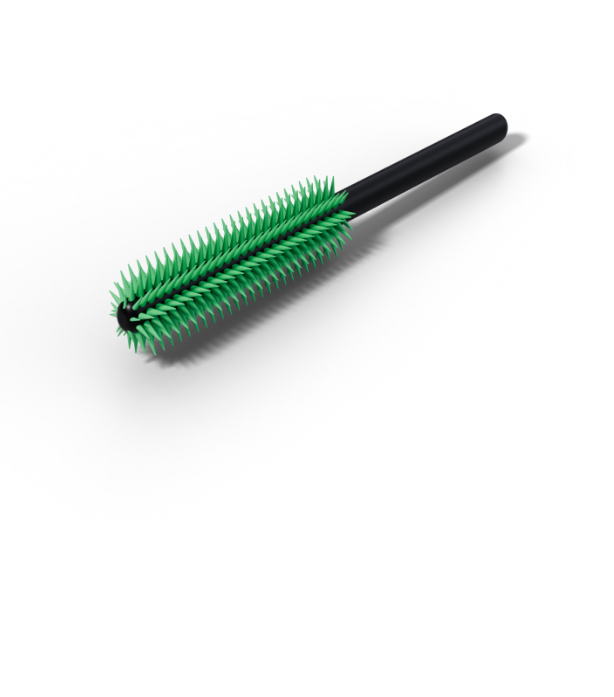
Benefits of Single- and Multi-Component Molds
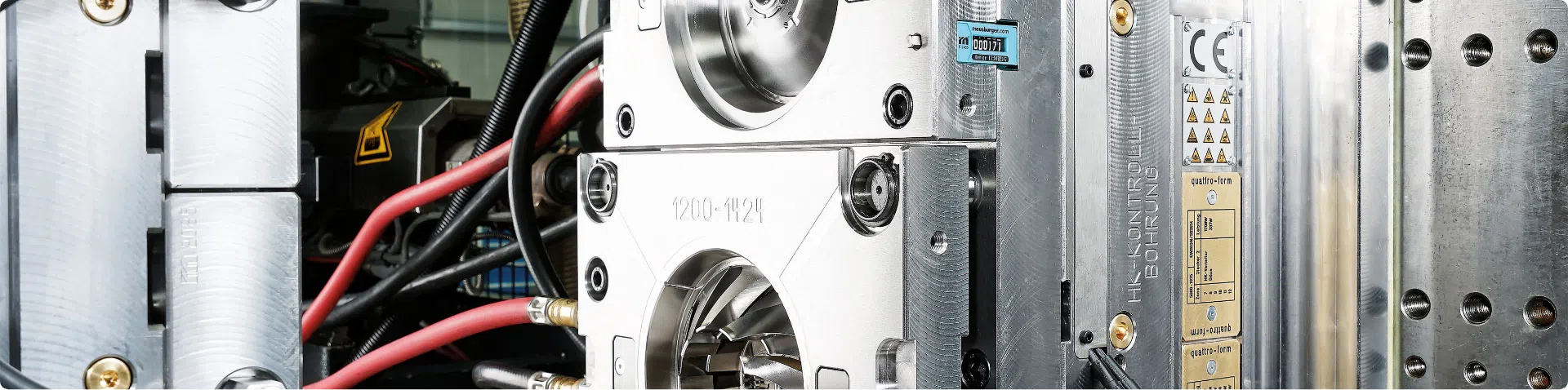
Typical Applications for Single- and Multi-Component Molds
Single- and multi-component molds are the foundation of injection molding. Almost every plastic component is produced either as a single-component part or as a multicomponent solution that combines additional materials or functions. This technology is used across a wide range of industries and can be tailored to specific application requirements.
Tooling Solutions for Single- and Multi-Component Applications
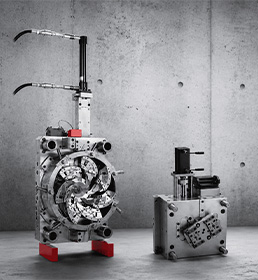
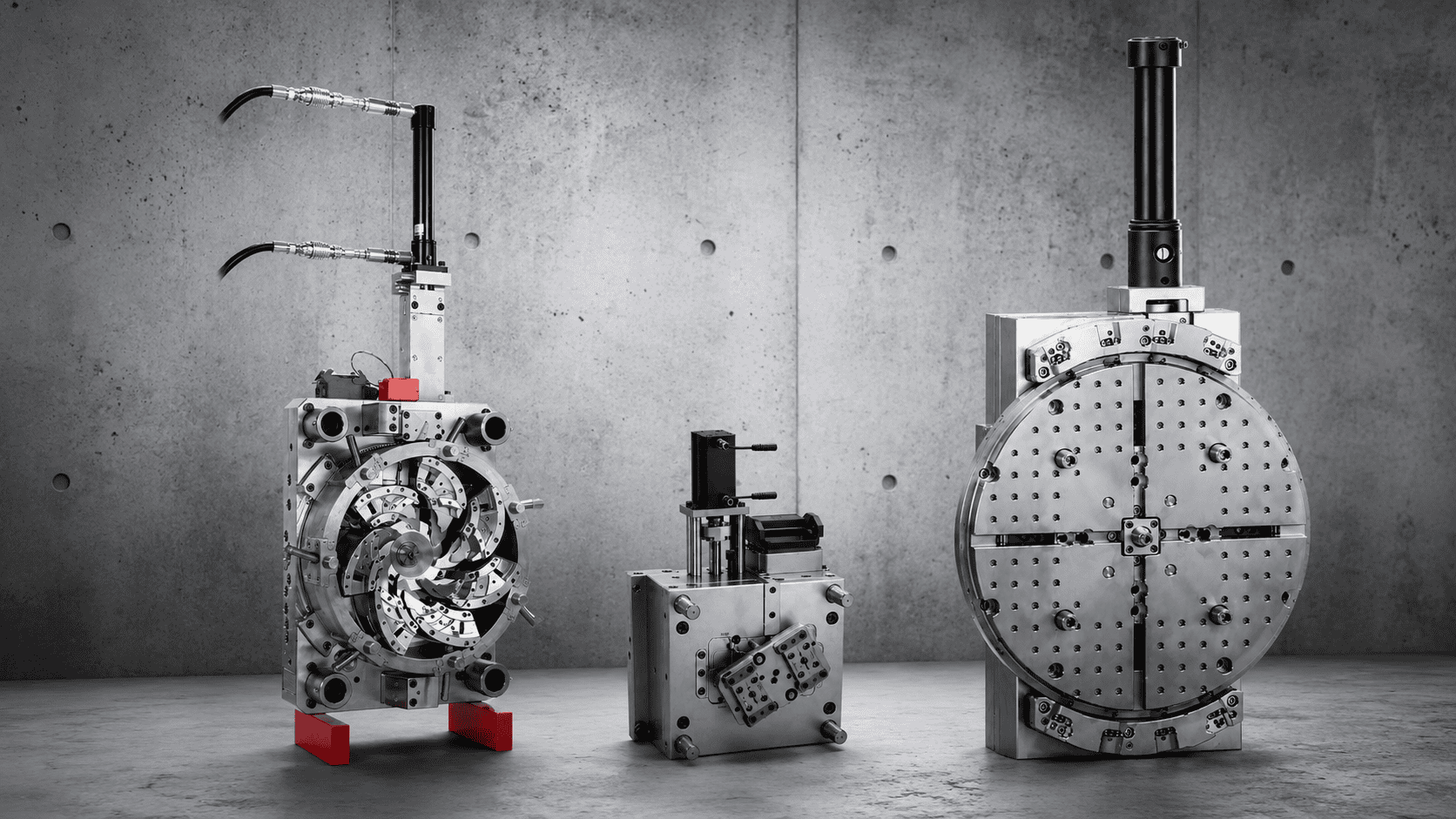
Single- and multi-component molds are engineered to combine multiple materials and functional features within a single tooling concept. Part geometry, material transitions, and process sequences must be precisely coordinated to ensure reliable production.
Discuss Your Single- or Multi-Component Mold Project
Are you developing a component made from one or multiple materials and looking for the right tooling concept?
quattro-form develops single- and multi-component molds tailored to your material selection, gating concept, and production process, ensuring that all functional requirements are reliably integrated into the tooling.
FAQ
Frequently Asked Questions About Single- and Multi-Component Molds
Can insert molding be combined with multi-component molding?
Yes. Inserts can be integrated into multi-component molding processes. Accurate insert positioning, transfer sequences, and overmolding must all be considered during the tooling design phase.
What are the main challenges in multi-component mold design?
Key challenges include precise material transitions, accurate part positioning, and the synchronization of individual process steps. In addition, all mold movements must be carefully coordinated to ensure reliable production.
What is the role of the hot runner system in multi-component molds?
The hot runner system controls the injection of each material. Depending on the application, open nozzles or valve gate nozzles are used to precisely control material flow and gate locations.
How are multiple materials combined in a mold?
Depending on the application, rotary tables, index plate systems, or automated transfer solutions are used. The part is transferred between molding stations and overmolded sequentially with different materials.
When should a 1K mold be used and when is a multi-component mold the better choice?
A 1K mold is used when a component is manufactured from a single material. Multicomponent molds are used when two or more materials or functional features need to be combined within one molded part.